Kids' Birthday Bunting Layouts: Colors, Heights, and Photo-Friendly Placements
The bunting usually goes up last. The cake is ordered, the balloons are inflated, the good tablecloth is on, and then someone stands in the middle of the room holding a string of triangles and asks, "Where should this go?"
That question has a better answer than "anywhere." Bunting frames the parts of a party people actually look at: the cake, the presents, the doorway where the birthday kid makes an entrance. Get the height and color right and a simple string of fabric does more than a wall of balloons. Get them wrong and it either disappears into the wall or ends up in a five-year-old's hands before the candles are lit.
Here's how to plan the layout before you climb anything.
Measure First: Three Questions That Save a Second Trip
Before buying or unpacking anything, answer three questions. How wide is the wall or table you're decorating? How high is the ceiling, or where is the nearest hook, rod, or shelf edge you can clip to? What's already in that airspace — a ceiling fan, a pendant light, a vent, a curtain?
A ceiling fan is the one people forget. Bunting and moving fan blades do not coexist. The same goes for hanging anything from a fire sprinkler head in a rented hall, and for running a strand across a doorway that opens inward.
Width matters too. A swag that extends about six inches past each end of the table below it looks deliberate. One that runs a foot past each end starts dangling into the serving space, and someone will knock it down while reaching for a plate. In a small room, resist the urge to span the entire wall. One well-placed three-foot swag over the cake table beats a room-wide strand that ends up drooping behind the couch.
Colors: Base, Accent, and One Wildcard
The easiest way to make bunting look planned instead of random is a three-part palette. Pick a base color that repeats the room or the tablecloth — cream, kraft brown, navy, soft gray. Add two accents. Then allow one wildcard, the color that makes it feel like a birthday rather than a catalog page.
Contrast is what makes bunting read in photographs. Cream bunting on a cream wall vanishes. On a white wall, deeper tones — navy, teal, brick, mustard — show up immediately. On a dark wall, pastels and whites pop. If your tablecloth already has a busy print, keep the bunting solid or striped and let the cloth do the talking.
Metallics are best used sparingly. A few gold or silver flags catch light nicely, but a full strand of foil reflects flash and can wash out faces in group photos.
Cake Table Bunting: Height and Sightlines
This is the strand that matters most, because it appears in nearly every photo taken at the party.
Hang the lowest point of the swag roughly 12 to 18 inches above the tabletop. That clears the cake, the candles, and the moment a grandparent leans in for a close-up. If you're using a tiered stand, measure the top of the highest tier and add about a foot.
Keep the bunting behind the table rather than directly over it. A backdrop on the wall gives the cake a frame; fabric hanging over the table competes with it and creates something for guests to duck under. If you must hang over the table, go higher than you think — around the 6-foot mark — and check it from where guests will actually stand.
If candles are part of the plan, treat them as a hard line. No fabric directly above an open flame. Move the bunting to the wall behind the table, or swap candles for a number topper.
Gift Area and Entrance: Practical Heights
The gift table gets busy, and busy means bumping. Hang that swag with its bottom edge around 5 feet off the floor, high enough that kids dropping presents won't hook it on the way down. A short vertical strand beside the gift table works better than a wide swag, because it stays clear of the stacking zone.
At the entrance, you're solving for tall adults. Six feet six inches to seven feet keeps hair and hats clear. If the doorway has a door that closes, don't run a strand across the frame — use two vertical drops flanking either side instead. They read as an entrance without snagging anyone.
For a birthday kid's grand entrance, a doorway swag paired with a strip of plain floor works better than confetti. It frames the walk without creating cleanup.
Photo-Friendly Placements
Walk to where you'll stand with your phone and look at the room from there. That's the shot that ends up on the family group chat.
- Choose an evenly lit wall. A window directly behind the subject turns the birthday kid into a silhouette.
- Frame the middle, don't fill it. Leave a clear band of wall at the center where the cake and the kid will be, with bunting arcing above or running down the sides.
- Mind the band that matters. Kids photograph around 3.5 to 4 feet off the floor, adults around 5.5. Keep the busiest part of the pattern in that range.
- Test with one photo before guests arrive, at the height you'll actually shoot from. Adjust once, then leave it alone.
- Anchor the wide shots. A long swag on the main wall makes a good backdrop for group photos because it's wider than the frame.
Kid-Safe Fastening, Start to Finish
Fabric bunting is heavier than it looks, especially layered, so use anchors rated well above the weight. Then keep every tail short. Long ribbon loops are what small hands grab.
- Removable adhesive hooks for painted walls; test one on a hidden patch first.
- Binder clips on existing curtain rods, shelf edges, or a photo backdrop stand — no wall damage at all.
- Tension rods across doorways or between cabinets for a quick, clean span.
- Painter's tape for lightweight paper flags only, pressed flat and checked twice.
- Trim ribbon tails to a few inches and tuck loose ends behind furniture or the table edge.
- Keep strands away from cribs, playpens, high chairs, and anything a toddler can reach from a seat.
- Never run a low strand across a walkway, the route to the bathroom, or the serving edge of the cake table.
- Give it a firm downward tug once it's up. If it moves, redo the anchor.
The Five-Minute Pre-Party Check
- Stand at kid eye level and look for anything within arm's reach.
- Tug each anchor and re-clip anything that shifts.
- Sight the cake table from where guests will stand — cake visible, fabric behind it, no lights or fans in the way.
- Take one test photo and check the color contrast against the wall.
- Trim stray ribbon ends and step back.
Then leave it. A layout that's simple, secure, and hung once will still look right in the photos — and it'll still be standing when the last slice of cake is gone.
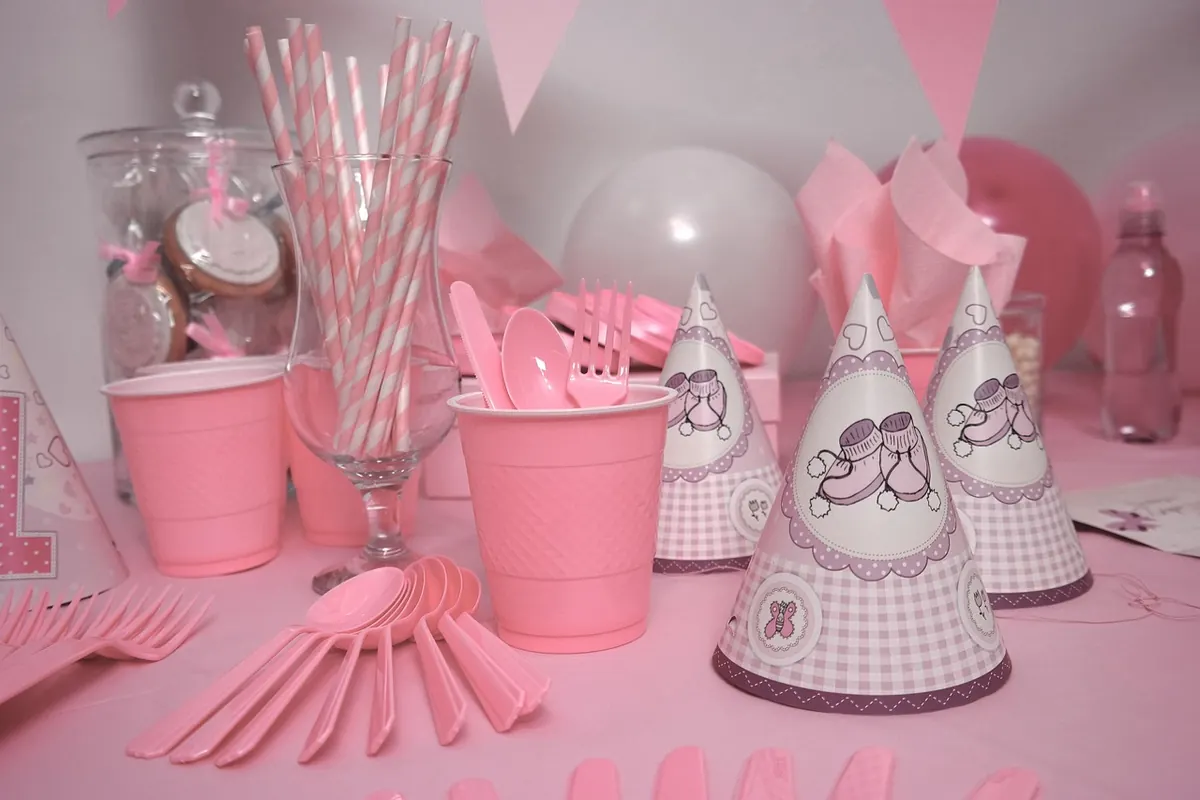
Photo: gryzoon / Pixabay
You Might Also Like
A practical local guide to borrowing or renting community bunting, checking it before you take it home, and storing it so it survives to the next festival.
Windy gardens punish flimsy bunting. Here is how to choose weatherproof flags, anchor them properly, and space lines so they stay up.