Bunting Size Guide for Beginners: How Much Do You Need for Tables, Tents, and Doorways?
A strand of bunting looks generous in the product photo and strangely short once it is up. That gap between expectation and reality almost always comes down to two numbers: how wide each flag is, and how far apart you hang them. Get those right, and you can measure a table, a tent, or a doorway in about a minute and order with confidence instead of guesswork.
Start With the Flag Itself
Most triangle pennants sold for parties come in a handful of standard sizes, measured across the top edge: roughly 4×6 inches, 5×7, 6×8, 8×10, 9×12, and 12×18. The first number is the width, the second is the drop — how far the point hangs below the line. Rectangular flags use similar dimensions.
As a working rule, 6- to 9-inch-wide flags suit indoor use: cake tables, doorways, narrow walls, photo backdrops. Once you move outside or into a hall, step up to 9- to 12-inch flags. Small flags on a big tent look like confetti from across a garden, and oversized flags over a kitchen doorway will hang in your face.
Do not forget the drop. A 12-inch flag hangs a full foot below the line it is strung on. Over a doorway, that matters: you want the points clear of head height, or at least high enough that guests are not ducking.
Spacing Is What Changes the Math
Spacing is the gap between one flag's edge and the next flag's edge. It sets the mood, and it determines how many flags fit on a strand. Three common approaches:
- Tight: gap about a quarter of the flag width. Dense and festive, good for small rooms and close-up photos. An 8-inch flag with a 2-inch gap uses 10 inches per flag.
- Standard: gap about half the flag width. This is the look most people picture. An 8-inch flag with a 4-inch gap uses 12 inches per flag — one flag per foot.
- Airy: gap equal to the full flag width. Good outdoors and in large spaces where the bunting will be seen from a distance. An 8-inch flag with an 8-inch gap uses 16 inches per flag.
The formula, once you have picked your spacing: flags per foot = 12 ÷ (flag width + gap). Round down rather than up so you never run short. If you are joining two strands, overlap the ends by a few inches and tuck the loose tail behind the first flag so nothing dangles.
Tables: Measure the Edge, Then Add for the Swag
For a rectangular table, measure the front edge only if you plan a single run, or front plus the two short ends if you want it to wrap. A standard six-foot banquet table has a 72-inch front; an eight-foot table runs 96 inches.
Then add for the drape. A strand pulled straight across is a line, not a swag, so multiply the straight run:
- Gentle swag, shallow dips: multiply by 1.1 to 1.2.
- Classic swag, noticeable curves: multiply by 1.25 to 1.35.
- Deep swag, dramatic loops: multiply by 1.4 to 1.5.
So a six-foot table front with a classic swag needs about 90 inches of garland — 7.5 feet. Add a 6-inch tie tail at each end and you are at roughly 8.5 feet, which rounds to a 9-foot strand. For a round table, measure the diameter and use the circumference if you are going all the way around: a 60-inch round table is about 15 feet around. If you only want a front arc, measure that arc with a piece of string instead of guessing.
Tents and Canopies: Think in Perimeter, Not Straight Lines
Tents are easier than they look because you are usually decorating the valance line at the eave, which is a straight run of four sides. A 10×10 canopy has a 40-foot perimeter. Decorating all four sides means buying about 42 to 45 feet once you add tie tails and a little slack. Decorating just the two front-facing sides drops that to roughly 20 to 22 feet.
Diagonal swags running from the center peak down to each corner are a different job. Measure the distance from the peak to the corner with a string held taut, then add 15 to 25 percent for the curve, and double it for the two halves of the swag if you want it to meet in the middle.
Outdoors, leave a little slack in the strand rather than pulling it banjo-tight. Wind will find any rigid line and work it loose. Zip ties around a frame beat tape, and a wrap of the strand around the pole before you tie off keeps the whole run from sliding sideways.
Doorways, Windows, and Wall Swags
A standard interior door is about 30 to 36 inches wide and 80 inches tall. A single swag across the top of a 36-inch door needs roughly 4 to 5 feet of bunting once you account for the curve and the tails. Two swags, meeting at the center with a small drop, need closer to 6 feet. For a full arch around the frame rather than a straight swag, trace the path with string rather than adding percentages to the width — arches turn corners and percentages lie.
Measuring with string is the single most useful habit here:
- Anchor one end where the bunting will start.
- Drape the string along the exact path you want, sagging it to match the swag depth you have in mind.
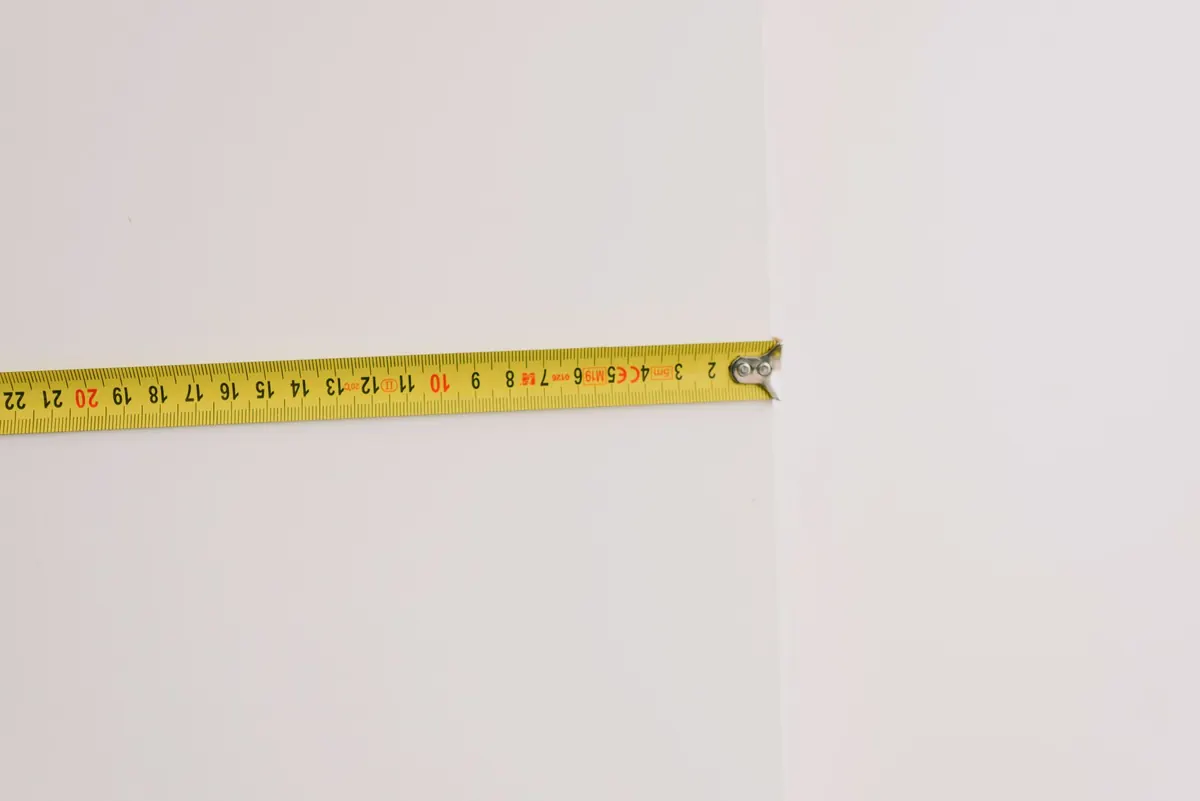
- Pinch the string where the bunting will end, then lay it flat and measure it with a tape.
- Add 6 to 12 inches for tails and joining, then round up to the nearest strand length.
String takes the guesswork out of curves, corners, and swags that dip lower than planned. It also lets you test a depth before you commit to a length you cannot return.
Quick Reference Numbers for Common Spaces
- 6-foot banquet table, front only, classic swag: 9 to 10 feet
- 8-foot banquet table, front only, classic swag: 11 to 12 feet
- 36-inch doorway, single swag with tails: 4 to 5 feet
- 10×10 canopy, all four valance sides: 42 to 45 feet
- 10-foot wall span, medium swag: 12 feet
- 12-foot room, one strand across the ceiling: 13 feet
These assume 8-inch flags at standard spacing. Swap in 6-inch flags and you can cut the counts by roughly a third; go to 12-inch flags and add about half again.
Measure Twice, Order Once
Buy the longest single strand you can rather than three short ones. Fewer joins means fewer places for the tape to twist or sag, and leftover bunting is never wasted — it dresses a gift table, a chair back, or the front porch rail an hour before guests arrive.
Before you commit to a whole run, hang three or four flags at your chosen spacing and step back. Ten seconds of looking tells you more about whether the gap feels right than any formula. Once it looks good, buy 10 percent more than the math says, keep the receipt, and hang from the middle outward. That way the swags stay even and any extra length ends up at the tie points, where you can hide it.
Photo: Ksenia Chernaya / Pexels


You Might Also Like
A practical local guide to borrowing or renting community bunting, checking it before you take it home, and storing it so it survives to the next festival.
Windy gardens punish flimsy bunting. Here is how to choose weatherproof flags, anchor them properly, and space lines so they stay up.